
Paragliding reserve parachute: the complete equipment guide

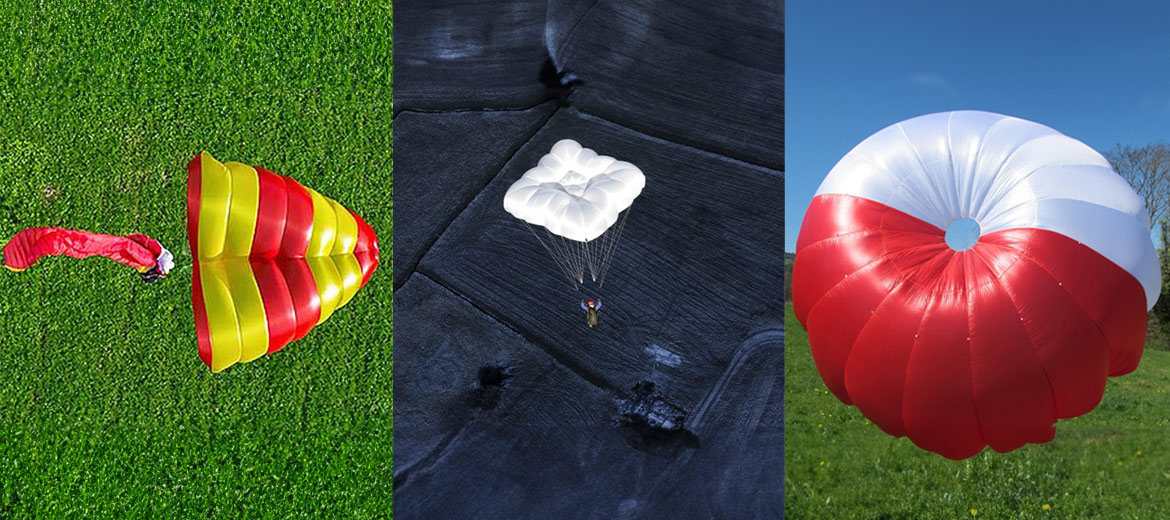
Welcome to this complete guide dedicated to the paragliding reserve parachute. From the necessity of carrying one to the technical selection criteria, we have gathered all the Air et Aventure expertise here to help you secure your flights.
Purchasing a reserve parachute is a crucial decision. It is not an accessory, it is the ultimate safeguard of your safety. Whether you are a newly certified pilot or an experienced cross-country flyer, choosing a paragliding reserve suited to your needs, your practice, and above all your safety requirements is essential.
This comprehensive guide combines technical expertise and practical advice to help you select the model that will accompany you safely in the air.
Access our specialized guides directly:
- Regulations: Is a reserve parachute mandatory?
- Technical: How does a reserve parachute actually work?
- Comparison: Selection of the best reserve models / Difference between a front-mounted reserve and an integrated reserve?
- Installation: Choosing your front or under-seat container
Are you looking for a specific model?
Types of reserve parachutes
There are currently four main types of reserve parachutes. The choice of shape influences the opening speed, stability, and sink rate.
-
Round Parachute: The most traditional type. Simple to pack and affordable, it provides a smooth opening. It is the ideal option for a first setup on a budget. However, its pendulum stability is lower than that of modern models.
-
Square and Flat Parachute: The new standard. More stable (less pendulum effect) and featuring faster opening, it offers a lower sink rate. However, it requires greater care during packing.
-
Triangular Parachute: The ideal compromise. It combines the stability of square models with the lightness sought by Hike & Fly pilots. It also offers very fast opening.
-
Steerable (Rogallo) Parachute: For expert pilots. It allows you to control your descent to avoid obstacles (power lines, forest). Its technical complexity and packing require specific training.
How to choose your paragliding reserve parachute?
This is the number one criterion. A reserve parachute that is not suited to your weight can compromise your safety. Paragliding reserves are available in different sizes to match each pilot profile.
Calculating the ideal all-up weight:
To achieve the best performance, your all-up weight (Total Flying Weight = Pilot + Equipment) should be around 85% of the maximum weight range specified by the manufacturer.
Formula: Actual all-up weight / 0.85 = Target max weight range.
Example: If your all-up weight is 75 kg: 75 / 0.85 = 88 kg. You should aim for a reserve with a maximum weight range close to 90 kg.
- Underloaded (weight too low): The sink rate will be low, but the wing will be very sensitive to air mass movements. You may experience large pendular oscillations and risk being dragged on the ground after landing.
- Overloaded (weight too high): The wing is very stable, but the sink rate (vertical speed) increases. The impact on landing will be harder.
Weight and volume: Standard, Light or Ultra-Light?
A paragliding reserve must not only support your weight, but also physically fit inside your harness.
1. Standard (1.6 to 2.2 kg): Robust, very affordable and durable. It is the ideal choice for a first setup or for regular site flying. However, they are quite bulky.
2. Light (1.15 to 1.6 kg): The best compromise between weight, price and volume. They are compatible with almost all harnesses and containers on the market.
3. Ultra-Light (< 1 kg): For Hike & Fly and mountaineering enthusiasts. Minimal bulk, but higher price. Intended for experienced pilots.
Installation: Under-seat or front container?
This is the number one criterion. A reserve parachute that is not suited to your weight can compromise your safety. Paragliding reserves are available in different sizes to match each pilot profile.
Calculating the ideal all-up weight:
To achieve the best performance, your all-up weight (Total Flying Weight = Pilot + Equipment) should be around 85% of the maximum weight range specified by the manufacturer.
-
Round Parachute: The most traditional type. Simple to pack and affordable, it provides a smooth opening. It is the ideal option for a first setup on a budget. However, its pendulum stability is lower than that of modern models.
-
Square and Flat Parachute: The new standard. More stable (less pendulum effect) and featuring faster opening, it offers a lower sink rate. However, it requires greater care during packing.
LEARN MORE: check out our guide on how to choose your front container.
Emergency procedure: The life-saving action
Knowing how to choose your equipment is one thing, knowing how to use it is another. In the event of an uncontrollable incident, the procedure is: Look, Pull, Throw.
1. Look: Visually identify the handle.
2. Pull: Apply a firm outward pull to extract the pod from the harness.
3. Throw: Throw the pod as hard as possible toward the horizon, ideally in the opposite direction of your wing if it is rotating.
Once the reserve is deployed, try to bring your wing toward you to avoid the "mirror effect," which would increase your sink rate. Prepare for impact by performing a parachute landing fall (PLF) to protect your back.
Maintenance, packing and lifespan
A reserve parachute has a theoretical lifespan of 10 years. To ensure it works when needed, it requires specific care:
- Airing: It is recommended to open it and let it air out for 24 hours in the shade in a dry room once a year.
- Packing: A reserve must be repacked every 6 to 12 months. If left too long, the fabric may stick together and delay deployment.
Air et Aventure also offers a reserve parachute packing service.
- Storage: Avoid humidity and leaving it in a car trunk under direct sunlight.
FAQ: Frequently asked questions by pilots
No. Each harness has a specific reserve container volume (expressed in liters). A "Standard" reserve will often be too bulky for a "Light" harness. Always check compatibility or ask us for advice.
Yes, if you have received proper training. However, we recommend using a professional at least every other repack to ensure there are no line twists (tangles) and to check the condition of the pod elastics.
Yes, it is recommended to take it out of the pod once a year and let it air for 24 hours in a dry, shaded room before repacking. This prevents the fabric from developing permanent creases.
The price ranges from €450 for a classic round model to over €1000 for ultra-light or steerable models. For a detailed calculation, check out our article on the price of a reserve parachute.
 English
 Français
 Deutsch