Paragliding helmet: the complete guide to choosing the right one

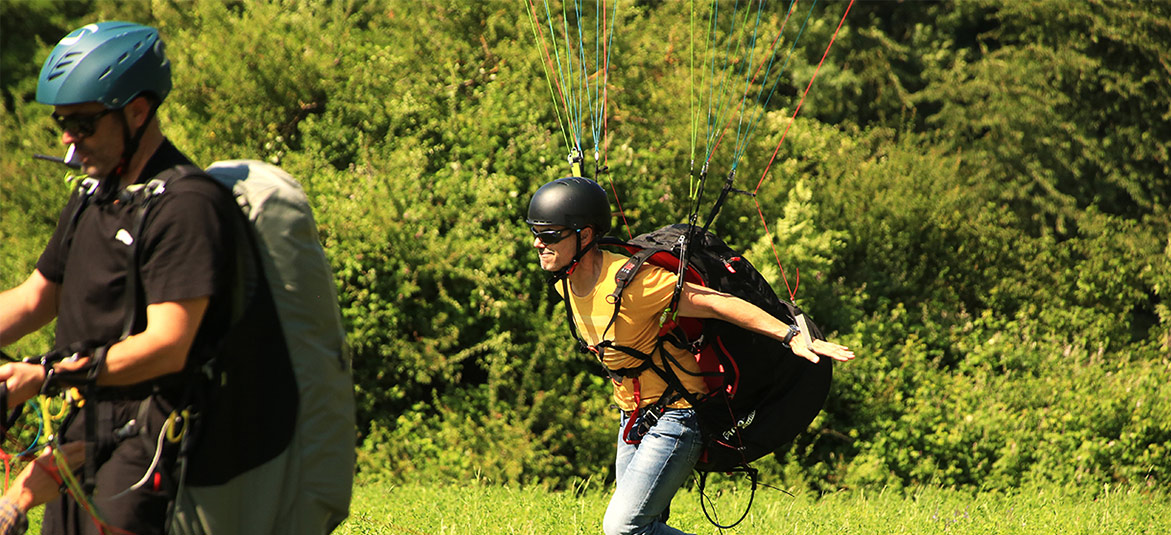
Paragliding is a unique experience that requires the right equipment to ensure safety and comfort. Among the essential gear, the paragliding helmet plays a central role: it is your ultimate protection against impacts during take-off, landing, or in case of an incident.
This guide brings together all the Air et Aventure expertise to help you understand standards, choose the right shell technology, and find the perfect size for your body shape.
Quick navigation in the Helmet guide:
- Regulations: Is a helmet mandatory in flight?
- Comparison: Selection of the best helmets
- Second-hand: Can you buy a second-hand helmet?
Are you looking for a specific model?
Is it mandatory to wear a helmet when flying?
There are currently four main types of reserve parachutes. The choice of shape influences the opening speed, stability, and sink rate.
-
In a school: During a paragliding course (beginner or advanced).
-
In tandem: For the passenger during a tandem flight (under the instructor’s responsibility).
-
In competition: For all pilots participating in an official event.
-
Specific legal framework: In case of prefectural orders or specific local regulations on certain flying sites.
In-Mold or ABS: Which shell technology should you choose?
The shell is your first line of defense. There are two main manufacturing types:
In-Mold technology (Lightweight):
The outer polycarbonate shell is fused with the internal foam (EPS).
- Advantage: Ultra-lightweight, highly appreciated for Hike & Fly or long flights.
- Disadvantage: More sensitive to small everyday impacts (transport).
ABS shell (Durability):
A thick, rigid outer shell mounted over the foam.
- Advantage: Maximum resistance to impacts and penetration. It is the ideal choice for durability.
- Disadvantage: Slightly heavier than In-Mold.
Full-face, open-face or visor helmet?
The choice of shape depends on your flying style and preferences.
Open-face helmet (Jet)
It is the most popular option. It protects the top and sides of the head while offering a complete sense of freedom.
- Key advantages: Excellent ventilation, maximum peripheral vision, lightweight.
- Ideal for: Site flying, Hike & Fly, and warm days.
Full-face helmet
It provides full coverage including the jaw (fixed chin guard).
- Key advantages: Facial protection against impacts, better thermal and acoustic insulation (less wind noise in the radio).
- Ideal for: Cross-country flying, competition, or pilots seeking maximum safety.
Visor helmet
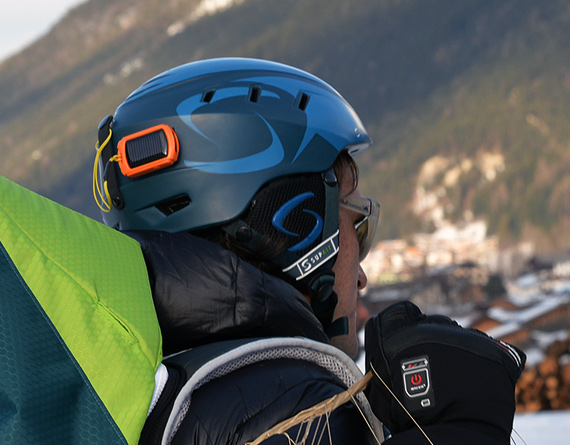
A strong trend represented by models such as the Charly Loop or the Supairvisor.
- Key advantages: Replaces sunglasses, protects from the wind (eye comfort), allows you to wear prescription glasses underneath.
- Ideal for: Glasses wearers and long-duration flights.
How to properly adjust your helmet?
A poorly adjusted paragliding helmet is a useless helmet. Here is the procedure to get it right:
- Measure your head circumference: Use a measuring tape about 2.5 cm above the eyebrows.
- Check the fit: Once worn and straps tightened, the helmet should not move forward or backward.
- Adjustment dial: Many models (such as the Neo Hexagon or the Supair School) feature a rear adjustment dial to fine-tune the fit to your head shape.
Certification: EN 966 standard
This is the key point to pay attention to. A ski helmet (EN 1077 standard) is not tested for the same constraints as free flight. Only the NF EN 966 certification guarantees protection adapted to our activity:
- Vertical field of vision: It requires a clear frontal edge so you can visually check your wing without obstruction.
- Impact absorption: Tests simulate impacts specific to flying, especially on the top of the head, unlike bike or ski standards.
- Ventilation safety: Designed to prevent lines or sharp objects from entering, reducing the risk of entanglement or injury during an incident.
- Hearing: The standard ensures you can still hear your environment (airflow, vario beeps, radio).
💡 Expert tip: For greater versatility, choose a dual-certified helmet (Ski and Paragliding), ideal for speed-riding.
Budget and second-hand: how much should you invest?
What is the price of a new helmet?
On average, the price of a paragliding helmet ranges from €100 to €300. This difference is explained by the materials used (carbon vs plastic), the presence of an integrated visor, and the quality of the internal padding.
Second-hand helmet: a false good idea?
Although tempting, buying a second-hand helmet is not recommended. A helmet may have suffered a structural impact invisible to the naked eye (micro-cracks in the shell), which compromises its protective capabilities.
 English
 Français
 Deutsch