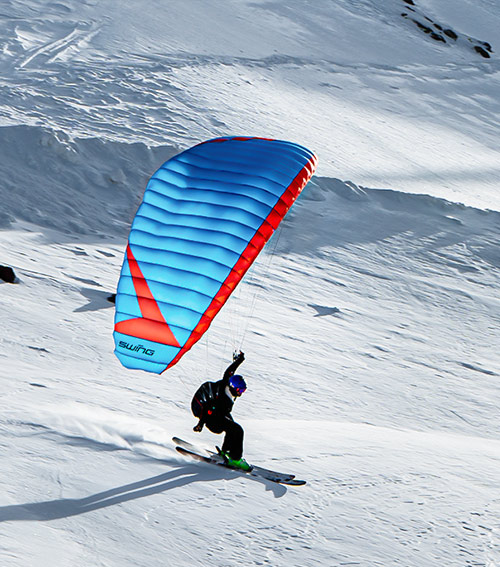
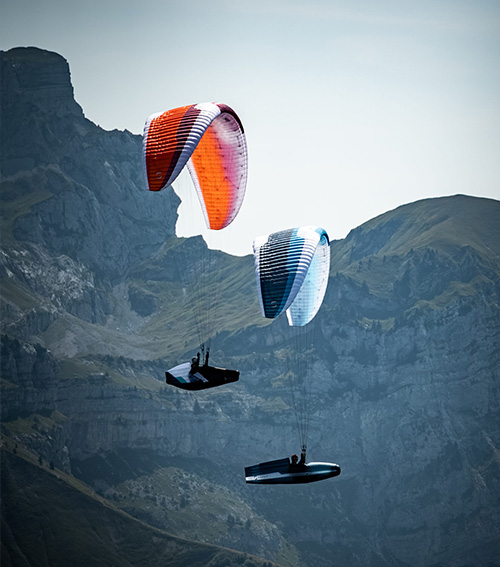
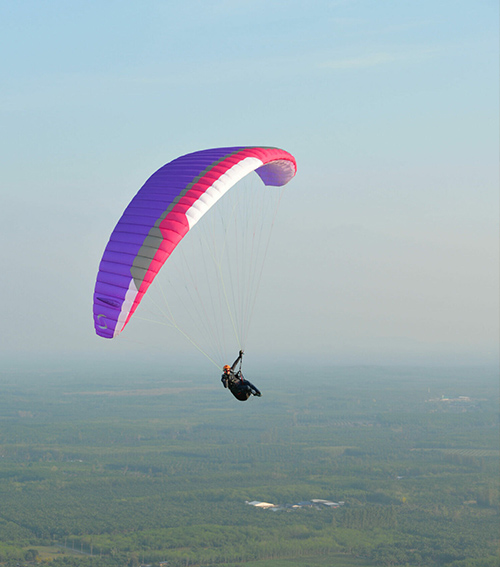
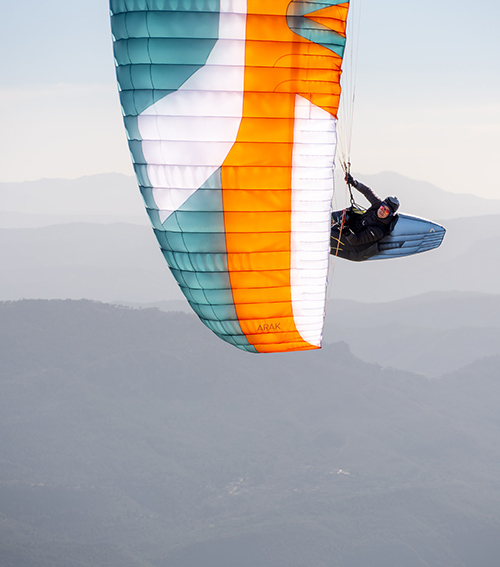
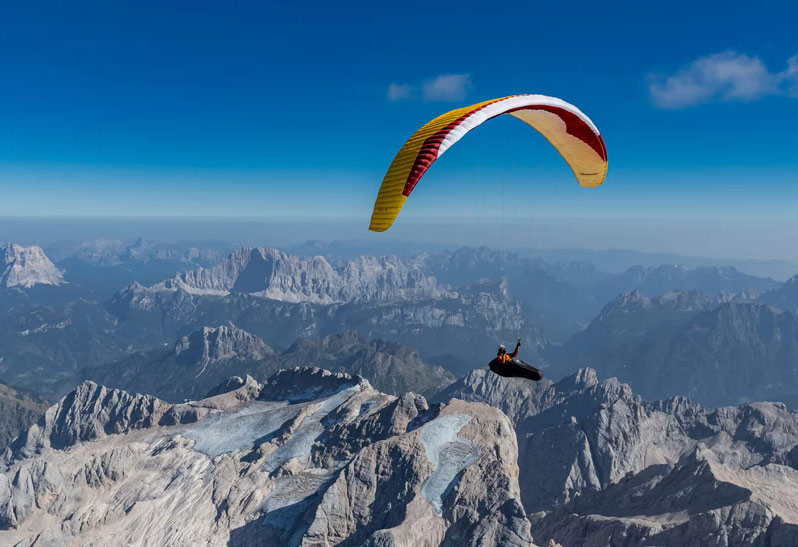
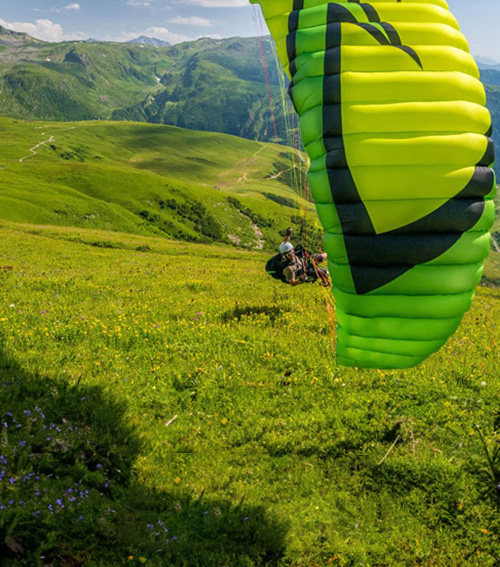
When choosing a paraglider, you need to take several criteria into account, the first of which is certification. Graded from EN A to EN D, your glider's certification will differ according to your level of flying. In this category, you'll find all the standards for paragliders: from EN A-rated school wings to EN CCC high-performance cross-country gliders. Once you've made your choice, you'll need to decide on the type of paraglider that best suits your flying style. You'll find tandem wings for tanhike and fly, bivouac flying or cross-country flying, and mini glider for acrobatic flying or speed riding.
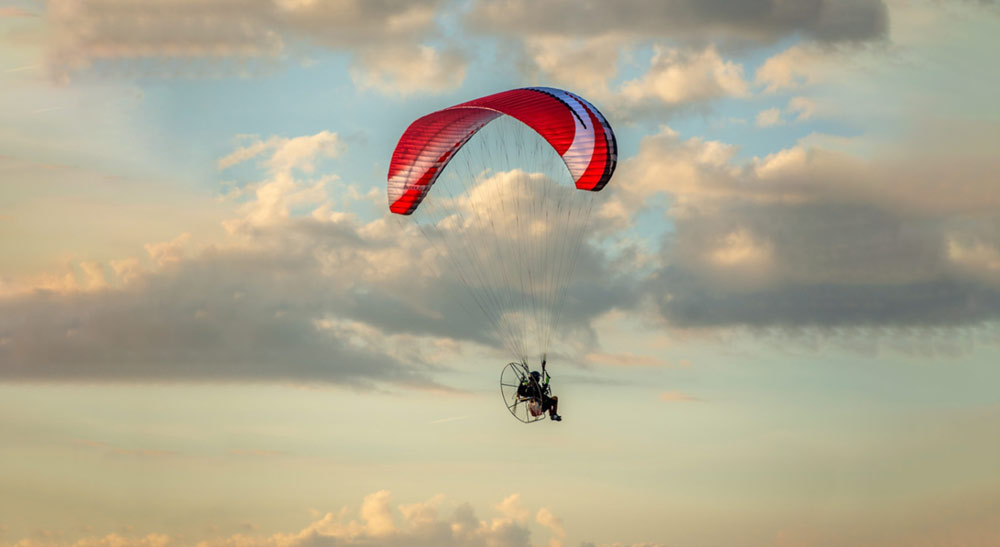
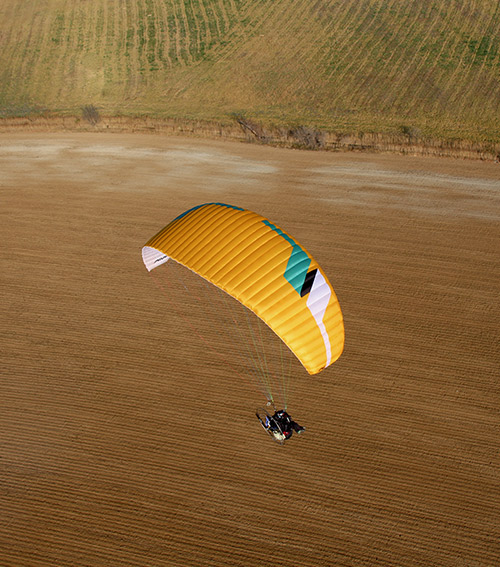
Once you've decided on the type of paragliding and paramotor wing you'd like to use, you'll need to select a glider size based on your T.F.W. (Total Flying Weight). Depending on where you are in the weight range, you'll experience different sensations in flight, and how quickly the glider wears down. For example, at the higher end of the range, you're assured of much better speed and a more enjoyable flying experience. At the lower end of the range, you're assured of a less reactive wing for a little more passive safety, as well as slower take-off and landing speeds.
Of course, when choosing your paraglider, don't forget to consider the glider / harness pairing. Directly connected to the paragliding wing , the harness must be in perfect harmony with it. Obviously, we won't be flying with a string harness and a high-performance wing just to stay in the sky for hours.










 English
 Français
 Deutsch